

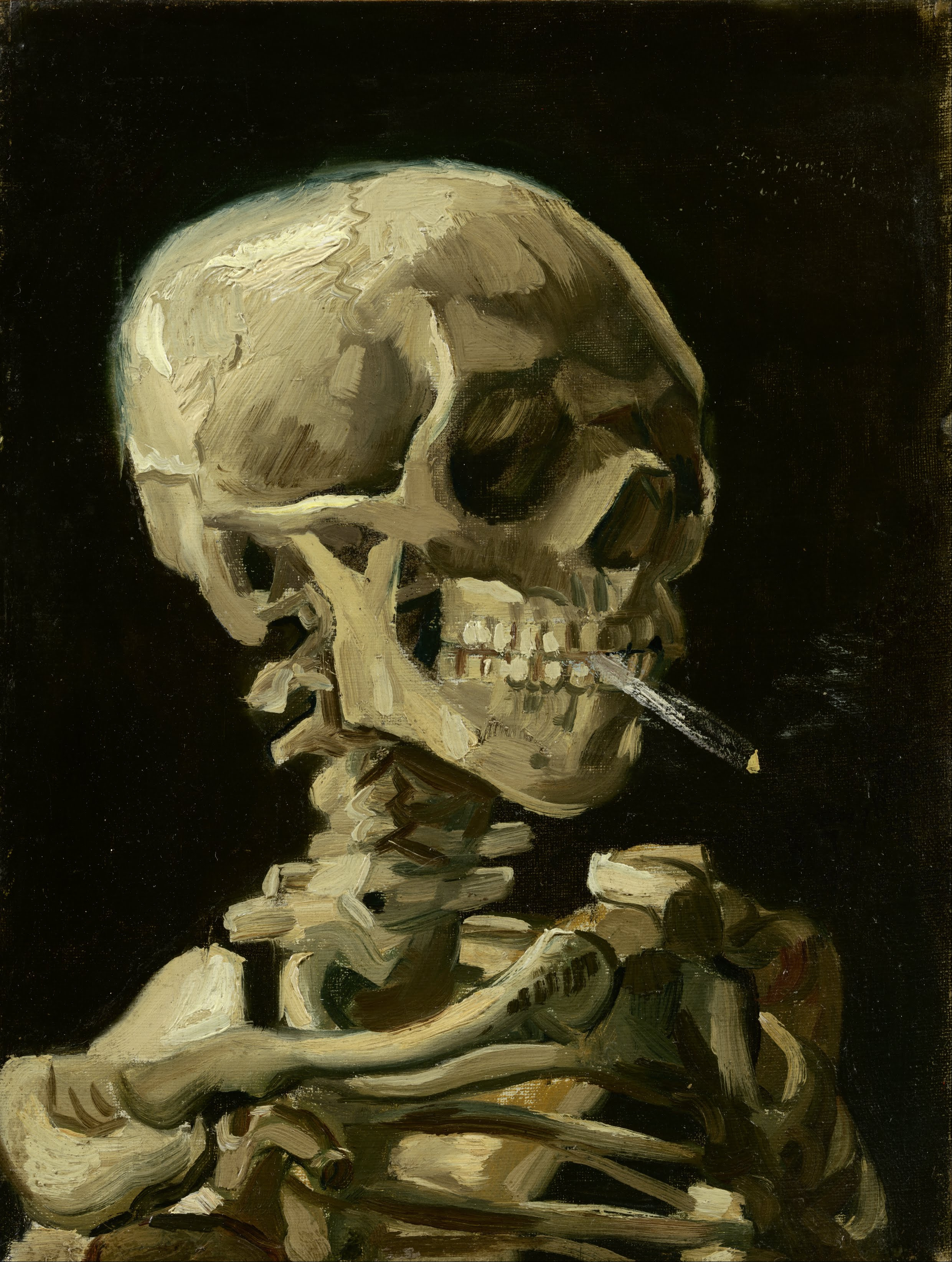

Color, made up of hue, saturation, and value, dispersed over a surface is the essence of painting, just as pitch and rhythm are the essence of music. Color is highly subjective, but has observable psychological effects, although these can differ from one culture to the next. Black is associated with mourning in the West, but in the East, white is. Some painters, theoreticians, writers, and scientists, including Goethe,[7"> Kandinsky,[8"> and Newton,[9"> have written their own color theory. Moreover, the use of language is only an abstraction for a color equivalent. The word "red", for example, can cover a wide range of variations from the pure red of the visible spectrum of light. There is not a formalized register of different colors in the way that there is agreement on different notes in music, such as F or C♯. For a painter, color is not simply divided into basic (primary) and derived (complementary or mixed) colors (like red, blue, green, brown, etc.). Painters deal practically with pigments,[10"> so "blue" for a painter can be any of the blues: phthalocyanine blue, Prussian blue, indigo, Cobalt blue, ultramarine, and so on. Psychological and symbolical meanings of color are not, strictly speaking, means of painting. Colors only add to the potential, derived context of meanings, and because of this, the perception of a painting is highly subjective. The analogy with music is quite clear—sound in music (like a C note) is analogous to "light" in painting, "shades" to dynamics, and "coloration" is to painting as the specific timbre of musical instruments is to music. These elements do not necessarily form a melody (in music) of themselves; rather, they can add different contexts to it.
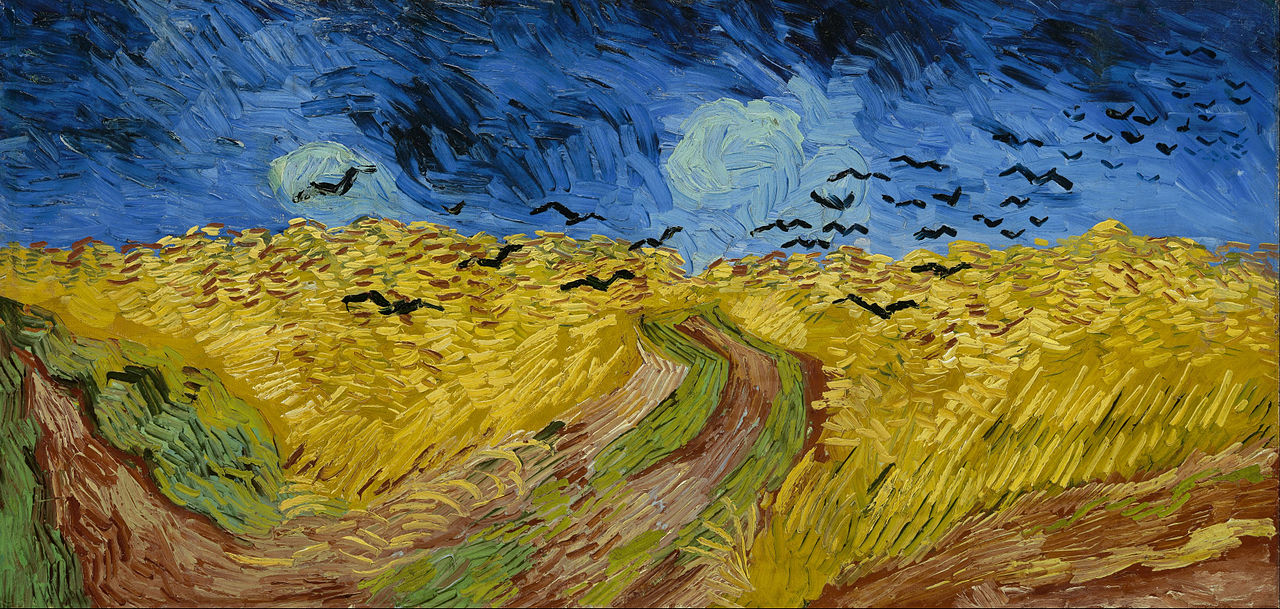
Painting is the practice of applying paint, pigment, color or other medium to a solid surface (called the "matrix" or "support").[1"> The medium is commonly applied to the base with a brush, but other implements, such as knives, sponges, and airbrushes, can be used. In art, the term painting describes both the act and the result of the action (the final work is called "a painting"). The support for paintings includes such surfaces as walls, paper, canvas, wood, glass, lacquer, pottery, leaf, copper and concrete, and the painting may incorporate multiple other materials, including sand, clay, paper, plaster, gold leaf, and even whole objects. Painting is an important form in the visual arts, bringing in elements such as drawing, composition, gesture (as in gestural painting), narration (as in narrative art), and abstraction (as in abstract art).[2"> Paintings can be naturalistic and representational (as in still life and landscape painting), photographic, abstract, narrative, symbolistic (as in Symbolist art), emotive (as in Expressionism) or political in nature (as in Artivism). A portion of the history of painting in both Eastern and Western art is dominated by religious art. Examples of this kind of painting range from artwork depicting mythological figures on pottery, to Biblical scenes on the Sistine Chapel ceiling, to scenes from the life of Buddha (or other images of Eastern religious origin).
Although Claude Monet has always been regarded as one of the founding fathers of the Impressionism movement, he and many of the Impressionist artists were also influenced by other artistic styles that impacted their Impressionistic style and led to their establishment in the art society. One of these influences was the Barbizon School, which was in the French village called Barbizon. This is an important point to note because of Barbizon’s stylistic approaches, which were mainly characterized by their “naturalistic” portrayal of the environment or people. We see the two figures standing together on an embankment; the bottom third of the painting is composed of the green grassy bank and the upper part, about two-thirds of the composition is dominated by the two figures and the expanse of the blue sky and white clouds behind them. The woman, or Camille, appears to be looking downwards at us, the viewers. She is standing in a side profile holding her parasol with both her hands cupped over its handle. She wears a white dress, typical of the fashion from the 1800s when this was painted.